STORY A,Practitioner & resident, Level 1 Practitioner Chenyu Wu
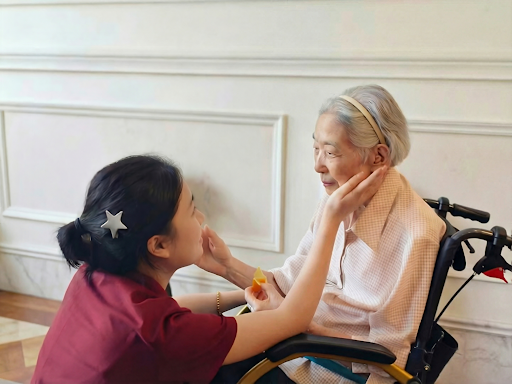
长辈是一位来自南京、温柔雅致的长辈,92岁,热爱戏曲,平日说话轻声温婉。确诊阿尔茨海默病后,她逐渐封闭自我,沉浸在自己的世界里,极少与他人主动交流。她心地善良,时常关心我的身体与工作状态,喂我吃东西。她有明显的短时记忆遗忘,常常忘记刚发生的事,也会忘记用餐时间、忘记自己是否已经吃过饭。她的社交圈十分简单,仅与邻居詹奶奶亲近,几乎不与其他长辈往来。相处中我坚持运用认可疗法,以温柔、尊重的眼神耐心陪伴、共情接纳,不纠正、不否定她的认知缺失。长久温柔相处下,她逐渐对我产生信任,会轻轻伸手抚上我的脸颊,这是她独有的温柔表达方式。挎包是时她极具安全感的象征物品,是她的精神寄托。每当找不到挎包时,她便会慌张烦躁、手足无措甚至落泪。我始终理解并认可她的情绪需求,耐心陪伴安抚、协助找寻物品,守护她的安全感。每位失智长辈都是独一无二的个体,我将持续以尊重与共情陪伴她、守护她。
Level 1 Validation Practitioner Chenyu Wu
The older woman is 92 years old and from Nanjing. She is gentle and elegant, loves Chinese opera, and usually speaks in a soft and warm manner. After being diagnosed with Alzheimer’s disease, she gradually became more withdrawn, increasingly immersed in her own world and rarely initiating communication with others.
She is kind-hearted and often shows concern for my health and how I am doing at work, sometimes even offering me food. She has significant short-term memory loss and frequently forgets what has just happened, when it is time to eat, or whether she has already eaten. Her social circle is very small. She is close to her neighbor, Grandma Zhan, but has little interaction with other older people.
In our time together, I consistently use Validation. I stay patiently alongside her, with a gentle and respectful presence, offering empathy and acceptance without correcting or contradicting her when her perception differs from mine.
Over time, through this gentle way of being together, she gradually developed trust in me. Sometimes she softly reaches out and touches my cheek. This is her own unique and tender way of expressing herself.
Her handbag is especially important to her and provides a strong sense of security. It is something she relies on emotionally. Whenever she cannot find it, she becomes anxious and distressed, sometimes becoming overwhelmed and even crying. I acknowledge her emotions and her need for security, stay patiently with her, offer reassurance, and help her look for the bag.
Every older person living with dementia is a unique individual. I will continue to accompany her with respect and empathy and help preserve her sense of security.
STORY B, Families, Mr.Yu,the son of Grandma Luo
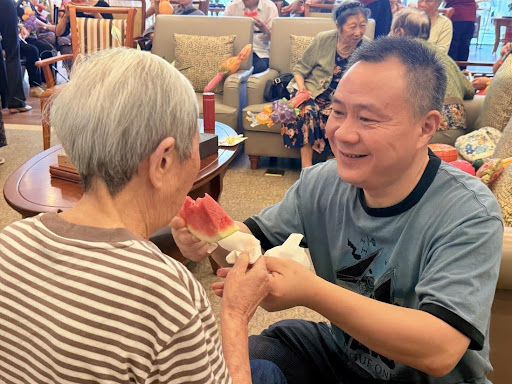
罗奶奶的儿子宇先生在参加完认可疗法工作坊后,有很深的感触,以前在家照顾罗老师时,自己会很容易着急,也会陷入深深的自责。老人反复问话、记不住事、情绪突然烦躁、行为奇怪,家属第一反应就是纠正、解释、讲道理,总想着把老人“纠正回来”。结果越说老人越激动,越反驳越闹情绪,彼此都很累、很委屈。通过了解和学习认可疗法,家属终于明白了:老人不是故意不听话,是受失智症的影响,定向能力和自我约束能力大大降低而造成的。现在家属最大的改变就是:不再计较对与错了。老人记错事情、重复说话、莫名焦虑,家属不再打断、不再否定,而是学会耐心听、体会情绪、理解老人心里的焦虑和不安。
家属们也在工作坊中互相倾诉、互相打气,发现家属们都有相类似的困扰,不再觉得自己是孤独的。大家都说,以前只关注“老人做的对不对”,现在通过了解认可疗法,学会了要关注“老人当下的情绪和情感状态,走进老人的内心世界,与他们共情”。家属表示,非常感谢认可疗法,帮助自己运用同理心的方式与失智的亲人相处,缓解他们作为家属的长期照护压力,使失智的亲人更愿意表达了。
Story B — Family Caregiver
Mr. Yu, Son of Grandma Luo
After attending a Validation workshop, Mr. Yu, the son of Grandma Luo, reflected deeply on his experience of caring for his mother at home. In the past, he would easily become anxious and would also experience a strong sense of self-blame.
When his mother repeatedly asked questions, forgot things, suddenly became agitated, or behaved in ways that seemed unusual, the family’s first reaction was often to correct her, explain, or reason with her. They kept trying to “correct” her and bring her back to what they believed was right.
The result was that the more they tried to explain, the more distressed she became. The more they contradicted her, the more emotional the situation became. Everyone was left feeling exhausted and hurt.
Through learning about Validation, the family began to recognize that she was not intentionally being difficult or refusing to cooperate. Dementia had affected her orientation and her ability to regulate her responses.
The biggest change for the family is that they no longer focus on what is right or wrong.
When she remembers something differently, repeats herself, or becomes anxious without an apparent reason, they no longer interrupt or contradict her. Instead, they are learning to listen patiently, acknowledge her emotions, and respond with empathy to the anxiety and uncertainty she may be expressing.
During the workshop, family caregivers also had opportunities to share their experiences and encourage one another. They discovered that many of them were facing similar challenges and realized that they were not alone.
Participants reflected that previously they had focused primarily on whether the older person was “right” or “wrong.” Through Validation, they learned instead to pay attention to the person’s emotions and feelings in the present moment and to respond with empathy.
The family expressed gratitude for Validation because it has helped them relate to their loved one living with dementia with greater empathy. They also felt that this different way of interacting helped ease some of the ongoing pressures of caregiving and created more opportunities for their loved one to express herself.